
Guide
Roofing SEO: The Complete Guide for 2026
Key Takeaways
- Roofing SEO blends local SEO (Google Maps) and organic search to drive leads beyond referrals and paid ads.
- Start with Google Business Profile (formerly Google My Business): upload job photos weekly and ask customers to mention your suburb in reviews.
- Build service area pages targeting “[service] + [city]” keywords to anchor your content strategy.
- Reviews that name specific services and locations boost your local rankings.
- Be patient—SEO results typically take 3-6 months to show real progress.
- Most roofing companies spend $1,500 to $5,000/month on SEO.
- Doing SEO yourself is an option if you’re okay with slower results.
Why Your Roofing Business Needs SEO
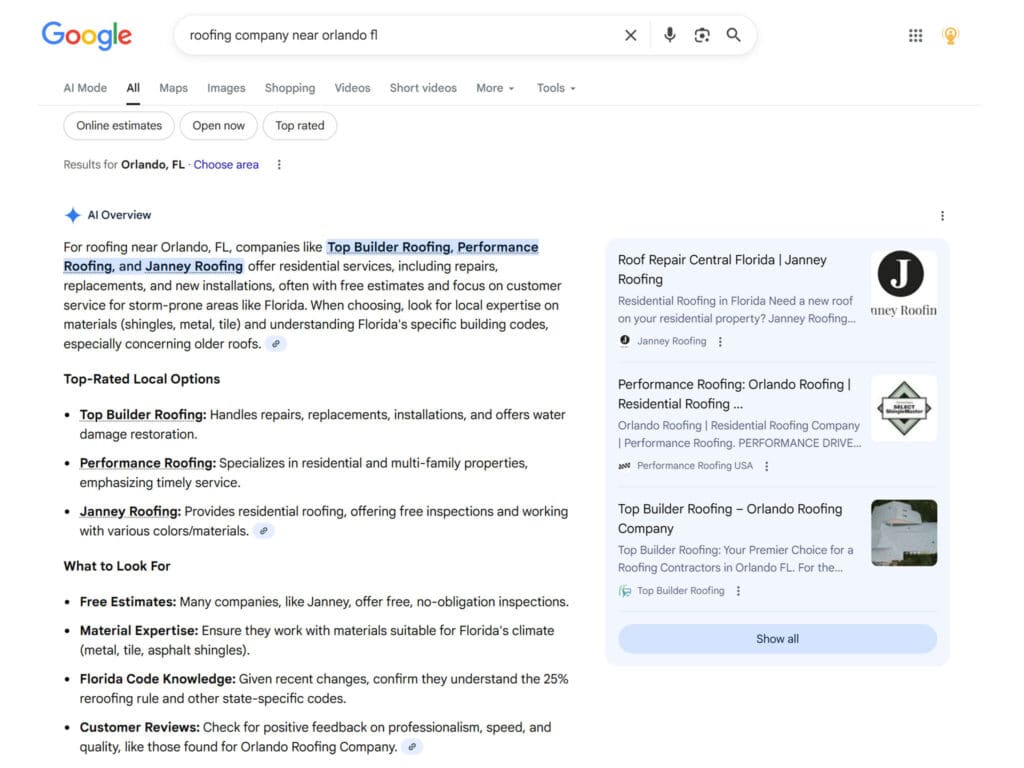
Roofing SEO helps your company rank higher on Google Maps and in organic search results. When customers search “roof repair near me” or “roofing company [city],” good SEO ensures they find you. It brings steady leads without relying only on paid ads or referrals. Your website works for you 24/7.
Online visibility matters more than ever. When a storm damages a roof, the first thing most people do is search Google. If you don’t show up on the first page, you lose that job. In competitive markets like Florida, a weak online presence hands work to your competitors every day.
At Search Quest, we help contractors get found everywhere customers search—Google Maps, organic results, AI assistants, and beyond. This guide walks you through optimizing your GBP listing, building local search signals, creating content that ranks, fixing technical issues, and tracking results.
What Is Roofing SEO and Why Does It Matter?
Roofing SEO is search engine optimization built for roofing contractors. It focuses on local visibility—showing up in Google’s Map Pack and organic results when people in your area search for roofing services. You’re not just trying to rank for “roofing.” You’re building a digital asset that proves you’re the local authority.
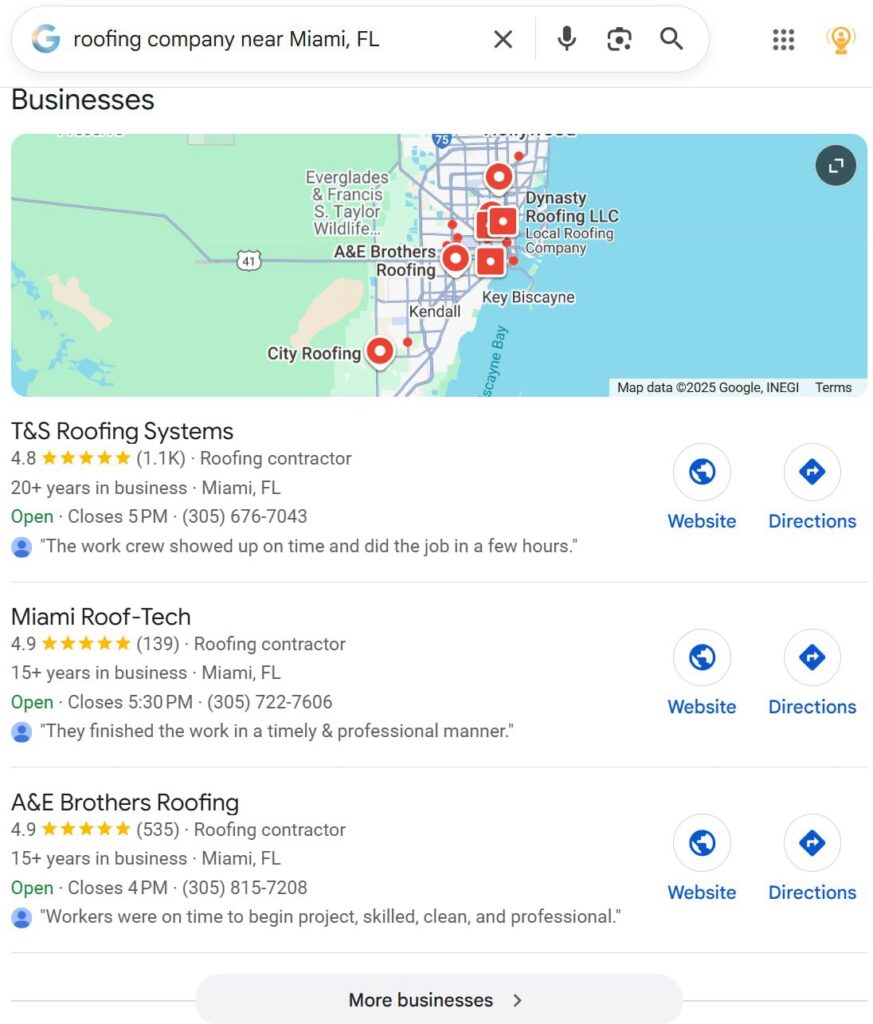
This matters because 98% of consumers use the internet to find information about local businesses, according to BrightLocal’s Local Consumer Review Survey. When someone types “emergency roof repair” or “storm damage inspection,” they need help now. You must show up in two places: the Map Pack (the three local listings with the map) and the organic results below it. If you’re not in either spot, you don’t exist to that customer.
Roofing SEO differs from general SEO because local signals matter more than global traffic. You only want clicks from people within driving distance. Your success depends on city-specific pages and reviews that mention your locations. These signals tell Google exactly where you work.
How Roofing SEO Differs from Paid Advertising
Many contractors confuse SEO with paid advertising. They work differently. Think of PPC as renting visibility. SEO owns it.
“Why rent visibility when you can own it? PPC stops working the moment you stop paying. PPC has its place, but remember SEO builds an asset that continues to generate leads long after the work is done.”
– Gary Honold, Founder, Search Quest
With PPC (like Google Local Services Ads), you pay for every lead. Roofing keywords often cost $15-$50+ per click. When you stop paying, your visibility disappears.
SEO builds earned visibility that grows over time. You invest upfront to create quality content and local authority. That asset continues to generate leads long after the work is done. PPC gives you instant traffic. SEO gives you lasting results. Smart roofers use both: PPC for quick cash flow while SEO builds the foundation.
| Feature | Roofing SEO | Paid Advertising (PPC) |
| Visibility Type | Earned (Organic & Maps) | Rented (Ads Section |
| Cost Structure | Fixed investment; ROI improves over time | Pay per click/lead; costs rise with competition |
| Longevity | Compounds; results last for years | Temporary; disappears when the budget stops |
| Primary Goal | Building a long-term asset | Immediate lead generation |
| Trust Factor | High (Consumers trust organic results more) | Lower (Labeled as “Sponsored”) |
Google Business Profile Optimization for Roofers
Your Google Business Profile is the most important factor for ranking in the Map Pack. A fully optimized GBP tells Google your business is active and legit. Stop treating it as just a listing. It’s the foundation of your local search strategy.
Complete every field: business name, address, phone number, website, hours, and service areas. Incomplete profiles signal low effort to Google and customers alike. For setup steps, see Google Business Profile Help.
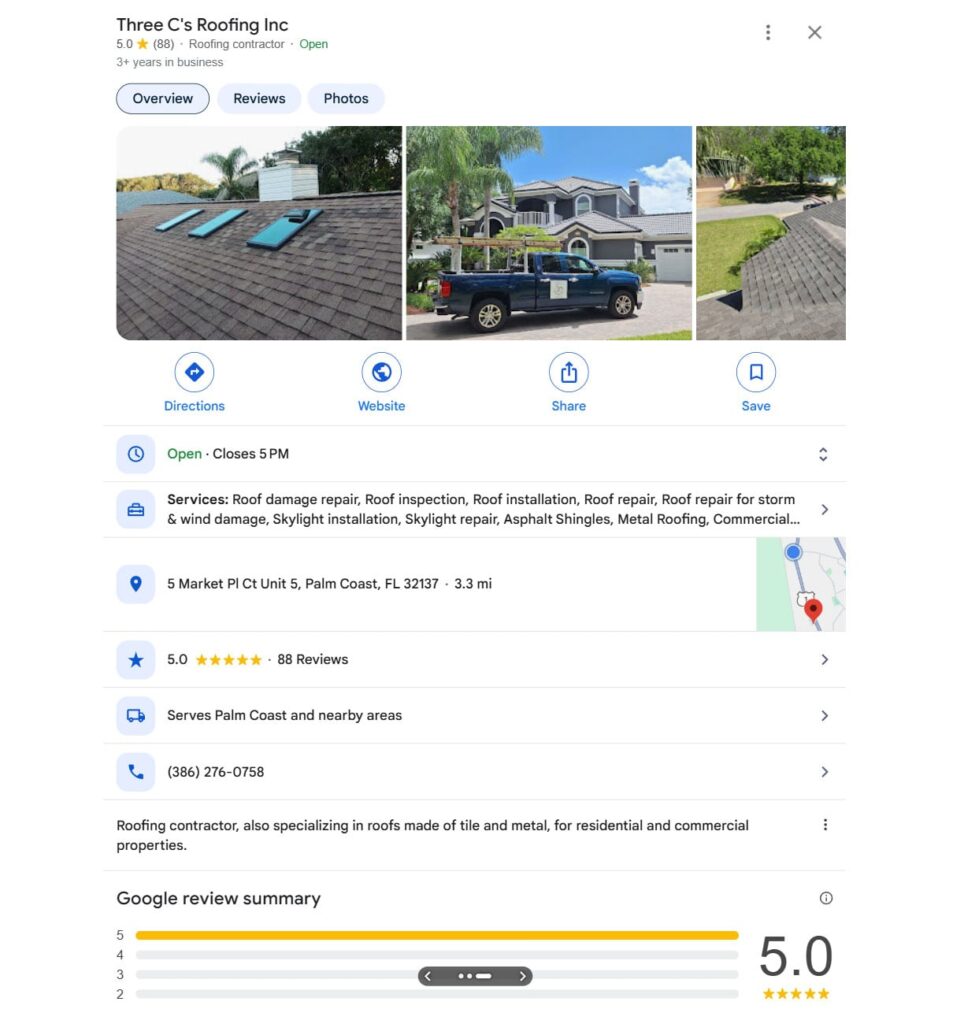
Pick “Roofing contractor” as your primary category. Add secondary categories like “Gutter cleaning service.” List every service you offer with clear descriptions. Make sure your website structure matches your GBP—your homepage should target your main service in your main city. Build out your Q&A section with at least five common questions. Enable messaging so you can respond to leads fast.
GBP Posts and Photos That Drive Engagement
Posting regularly proves to Google that you’re an active business. Commit to weekly updates and new photos. Feature completed jobs—show a new roof in a specific neighborhood with a brief description. Share seasonal tips like pre-hurricane inspection checklists. This keeps your profile fresh.
Photos build trust better than words. Upload before-and-after shots, your team on job sites, and your branded trucks. Use geo-tagged photos from your phone when possible. This sends a strong location signal to Google. One post and a few photos per week takes minutes but delivers real ranking benefits.
Managing Reviews for Local Rankings
Reviews are a direct ranking factor for the Map Pack. More positive reviews tell Google that customers trust you—your goal: a steady flow of 4 and 5-star reviews from real customers. Make review requests part of your job completion process. Give customers a direct link to your GBP page.
Here’s a tactic your competitors likely miss: ask customers to mention the specific service and their city or neighborhood. A review saying “Great shingle roof repair in Winter Park” is far more valuable than “Great service.” Location keywords in reviews push your visibility up fast.
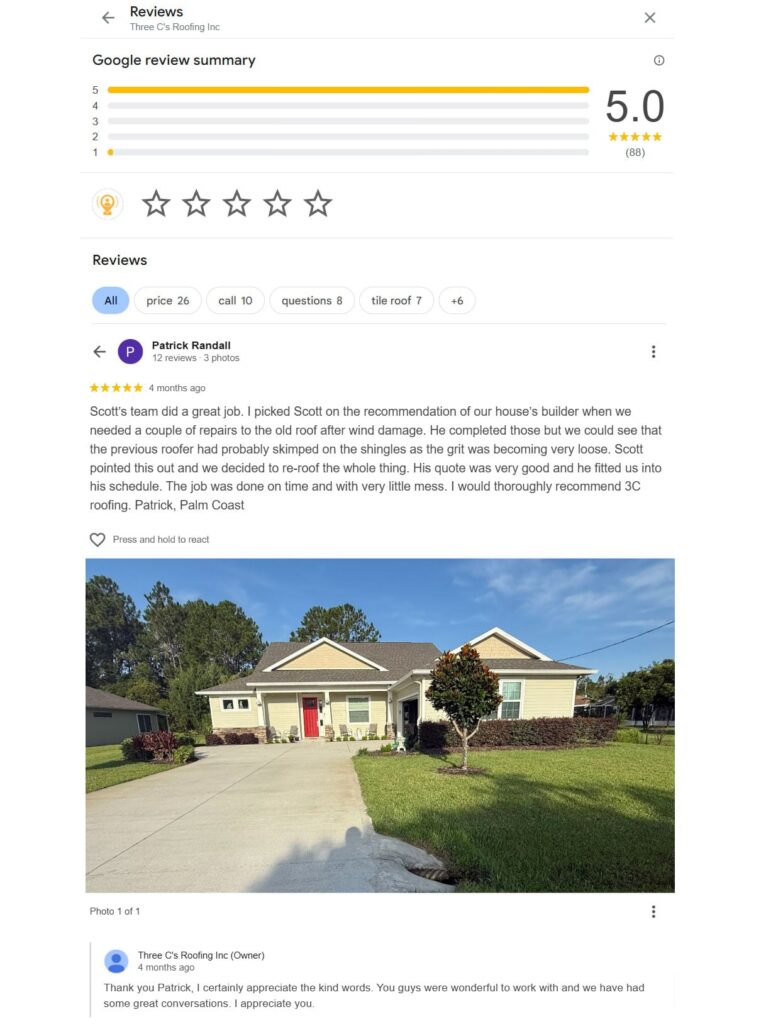
Respond to every review—good and bad. Never buy fake reviews. Google detects patterns and will penalize your profile. Authentic testimonials shared on social media also build trust and support your digital marketing efforts.
[GLOBAL-CTA]
Local SEO Strategy for Roofing Companies
Local SEO goes beyond your Google Business Profile. It includes citations on listing platforms like Angi, HomeAdvisor, and Yelp, plus location-specific content and backlinks from local sources. Together, these signals prove you’re a legit business in your area. Your goal is the Local Pack—the three-business map results. Strong local SEO gets you there.
Your Name, Address, and Phone number (NAP) must be identical everywhere online. Even small differences like “St.” vs. “Street” hurt your rankings. Your NAP should match across your website, GBP, and all other platforms.
Build online mentions of your NAP on directories and web pages. Claim listings on Yelp, Angi, HomeAdvisor, BBB, and your local chamber of commerce.
“Clients ask me all the time. Why does Google want NAP consistency? Google cross-checks your business info across the entire web. When it finds mismatches, it loses confidence that you’re a real, legitimate business—and ranks you lower. Consistency isn’t just a best practice. It’s how Google decides whether to trust you.” — Gary Honold, Founder, Search Quest
Building Local Citations
Citations are the foundation of local search visibility. Each consistent mention of your business acts as a vote of confidence. Inconsistent listings confuse Google and weaken your authority.
Claim and correct your business profiles on all major platforms like Angi. Don’t forget Nextdoor—list your business for every market you cover.
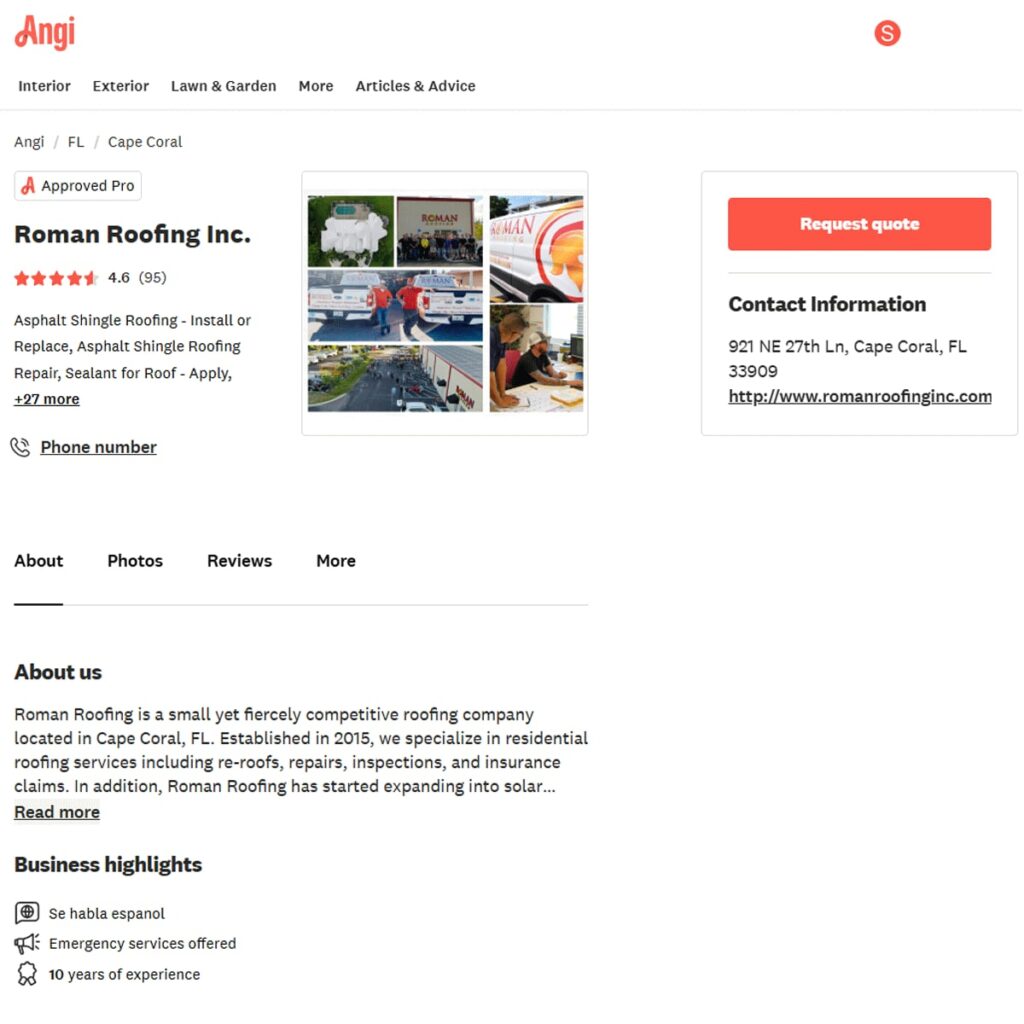
Audit your online presence to find NAP errors. Tools like BrightLocal or Moz Local can automate this. You can also do it manually by searching for your business name. Building consistent business listings is a step many competitors skip.
Earning Local Backlinks
Citations build trust. Local backlinks build authority. Stop chasing generic national directories. One link from a local real estate agency, HOA newsletter, or community blog beats ten links from a roofing directory.
Earn these links by building real relationships—partner with real estate agents who can refer you to new homeowners. Write a guest article for a local builder’s blog. Sponsor a youth sports team or community event. Just three to five quality local links per quarter can move the needle on your visibility.
Roofing Website Optimization
Your website is the hub of your roofing SEO strategy. It needs service pages for your core offerings, location pages for the cities you serve, and solid technical foundations.
Your homepage should target your primary service in your main city. Link clearly to service and location pages. Every page needs a clean URL (like /roof-repair-tampa/) and a title tag with the service and city.
Put your target city keyword in the title tag and the first sentence of the page. Use internal links to connect related pages—link your “Roof Replacement” page to your “Tampa” location page. This helps Google understand your geographic focus.
Service Pages That Rank
Don’t combine services on one page. Create a dedicated page for each: “Shingle Roof Repair,” “Metal Roof Installation,” “Commercial TPO Roofing.”
Each service page should be an in-depth resource. These landing pages generate roofing leads when you use relevant keywords naturally. Explain what the service is, when it’s needed, your process, and general pricing. Add FAQs.
Use service schema markup so Google understands what you offer. Link to related pages—your “Storm Damage Repair” page should link to location pages and your “Emergency Tarping” page.
Location Pages Done Right
Location pages are one of the biggest missed opportunities in roofing SEO. They publish thin pages that say “We offer roofing in [City Name].” That’s a liability, not an asset.
To rank, prove you actually work in that area. Feature real project photos from jobs in that suburb. Mention exact materials: “Owens Corning DuratioAI search resultsn shingles on a home in Audubon Park.” Add a map showing the streets where you’ve worked. This hyper-local proof is what Google rewards.
Technical SEO Basics
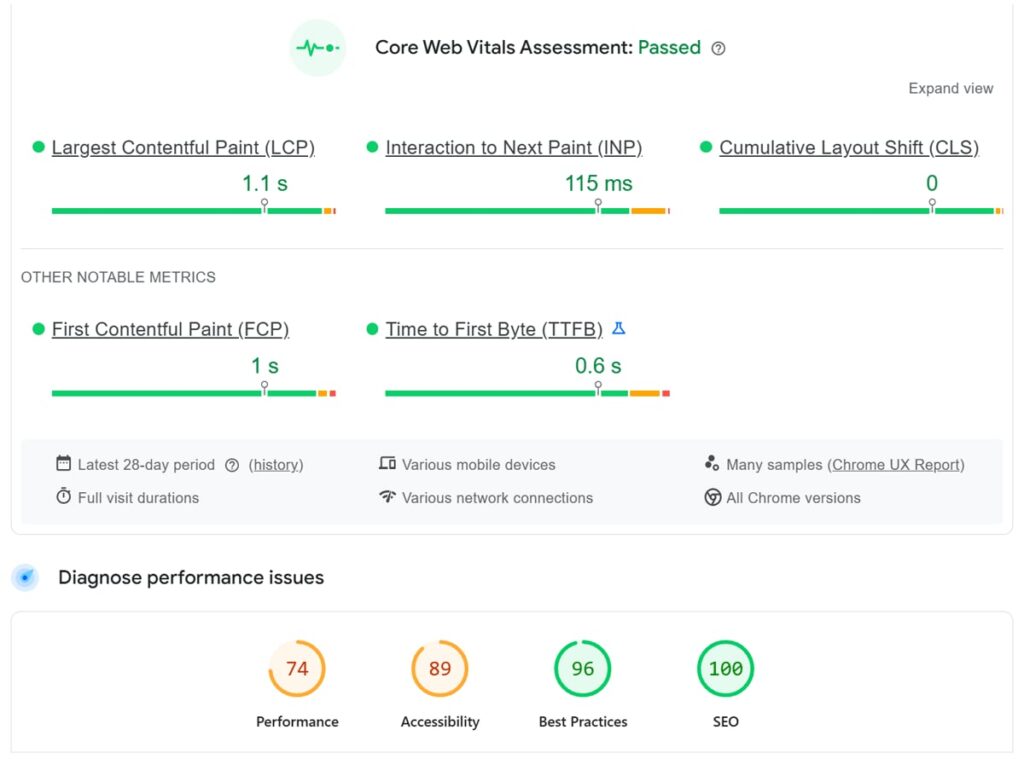
A sound website is the foundation for all your SEO work. Speed matters—page speed directly impacts user experience. Compress images. Keep code clean. Add optimized meta descriptions to every page. Strong on-page SEO starts here.
Your site must work on mobile. When a hailstorm hits, people search on their phones. A site that’s hard to navigate on mobile loses the lead.
Secure your site with HTTPS. Create an XML sitemap and submit it to Google Search Console. Fix crawl errors. Add schema markup to give Google context about your services and coverage areas.“Most technical SEO checklists are noise.Focus on the 5% that actually move the needle: page speed, mobile usability, and ensuring Google can crawl your pages. Fix those three things, and you’ve handled 95% of what matters.”
— Carlos Garcia, Co-Founder, Search Quest

Content Strategy for Roofing SEO
Content marketing builds topical authority and captures long-tail searches. Create helpful content that answers customer questions about roof damage, materials, costs, and maintenance.
Move beyond company updates. Publish resources that solve problems. When someone searches “how much does a metal roof cost in Miami,” your site should give the answer. This positions you as the expert before they call.
Mix evergreen guides with seasonal content. Articles on “signs you need a new roof” drive traffic year-round—storm-specific content spikes during hurricane season. Case studies prove your work on real local homes. FAQ pages help you rank for specific questions that AI search tools prioritize.
Blog Topics That Drive Leads
Focus on high-intent topics: cost calculators, material comparisons, “repair vs. replace” guides. These attract people who are budgeting for a project.
Cover insurance claim content and direct-pay topics separately—they attract different customers. Localize your content: “how salt air affects metal roofs in Sarasota” or “preparing for hurricane season in Tampa.”
Be strategic with DIY content. Write it to show the risks and complexity, steering readers toward professional help.
Building Topical Authority
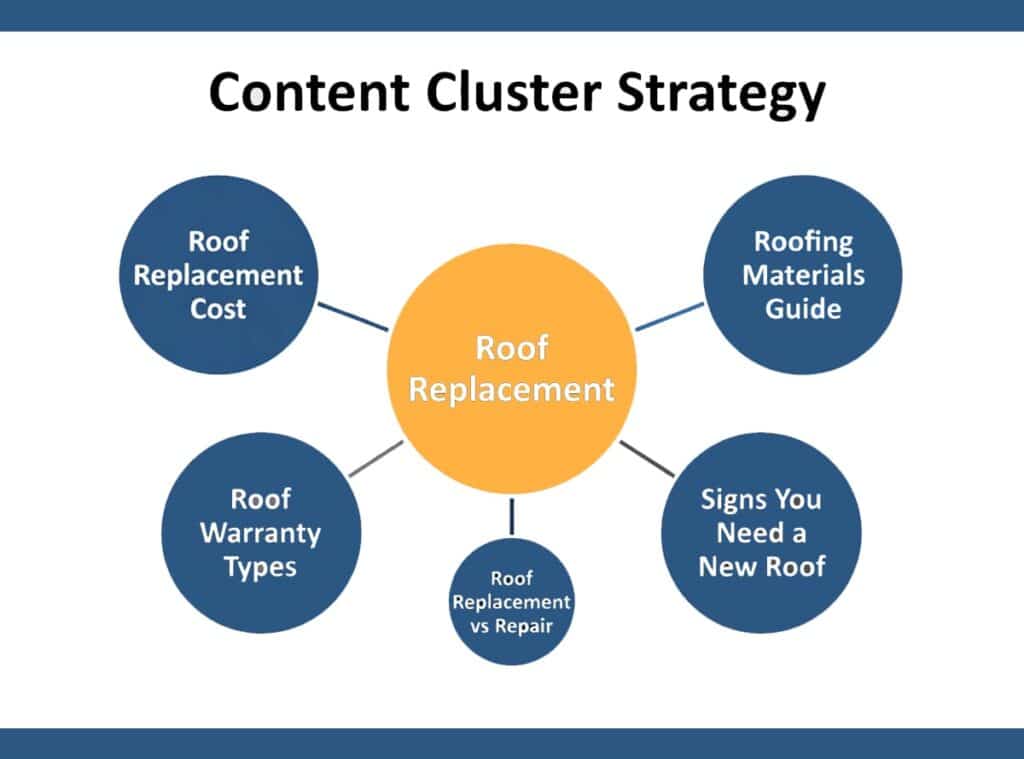
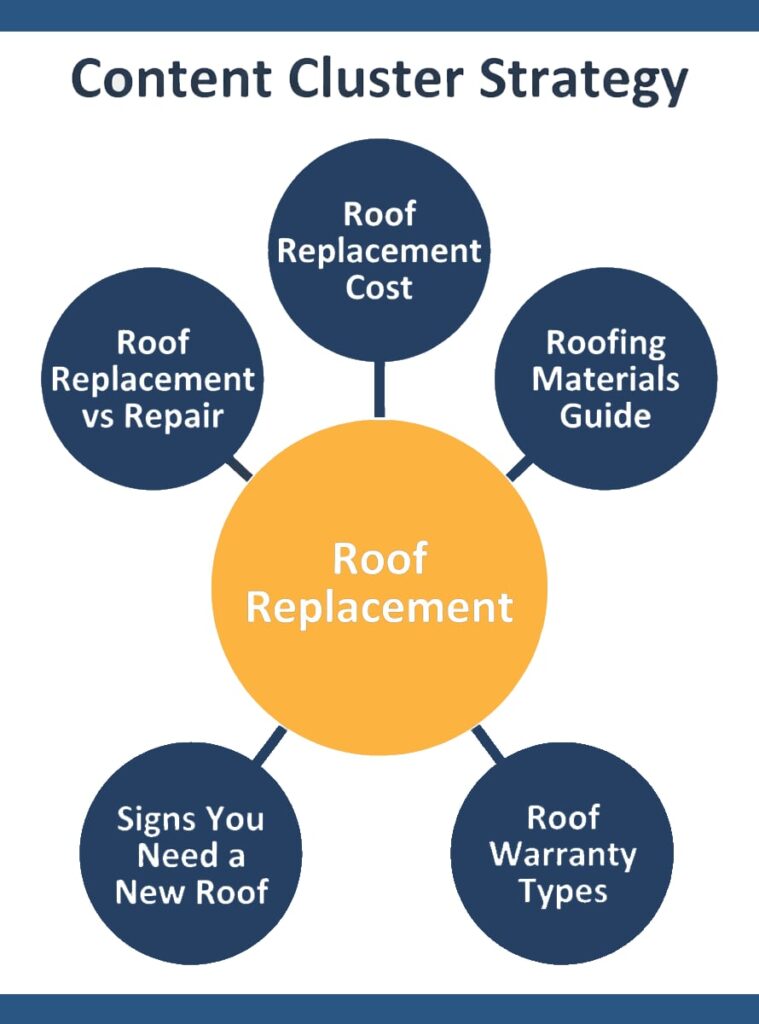
Organize content into clusters. Create a pillar page on “Roof Replacement,” then link it to articles on materials, costs, and warranties. This internal linking tells Google which pages matter most.
Update old articles to keep them fresh. Add TLDR sections, key takeaways, and FAQ blocks. These boost your chances of appearing in AI search results and featured snippets.
Consistent keyword research helps you find target keywords your competitors miss. Long-tail keywords future-proof your roofing marketing strategy as search evolves.
How Much Does Roofing SEO Cost?
Roofing SEO services cost between $500 and $5,000 per month. Most roofing companies invest $1,500-$3,000 per month for a comprehensive strategy.
Lower budgets get basic citation work and on-page tweaks. Higher investments fund content creation, technical fixes, and link building for competitive markets like Tampa or Miami. Cost reflects competition and the work needed to move your roofing website from invisible to a lead source for your roofing business.
Several factors affect price: market size, competition level, and your current site condition. A site with technical issues or past penalties needs more upfront work.
Watch for red flags: guaranteed rankings, no reporting, “secret sauce” tactics. Real SEO is transparent.
“Other agencies sell packages. We build partnerships. Your budget should match your goals—not some off-the-shelf plan from a national ‘roofing marketing agency’ designed to hit their monthly revenue targets. And here’s what they won’t tell you: the best SEO results come when you’re invested too—earning reviews, building local relationships, showing up in your community. Spend what makes sense, even if you need to start small. Make every dollar drive real growth.” — Gary Honold, Founder, Search Quest

Roofing SEO: What You Can Do Yourself
If you have more time than budget, you can handle high-impact tasks yourself. Start with your Google Business Profile—it’s free and delivers strong returns. Claim listings across major platforms, like Yelp and Angi, resolve any inconsistencies. Handling SEO yourself is slower, but consistent effort builds momentum.
Most important: build a system for requesting reviews that mentions the service and suburb.
Add a roofing calculator for instant estimates to capture leads. But here’s the honest math: DIY SEO takes about one day per week. That’s a Saturday away from your family—or one extra day on a job that pays for professional help and then some. For most contractors, working one more day and hiring out the marketing puts you ahead. DIY works best as a bridge until revenue supports a professional you can trust to help you.
When to Hire a Roofing SEO Agency
Once the math makes sense, the question becomes who to hire. Not all SEO help is equal—especially for roofers.
A good agency brings expertise in roofer SEO, advanced tools, and proven systems. Effective SEO for roofing companies requires coordinated marketing strategies across an entire SEO campaign.
Before hiring, ask for case studies from other roofers. Ask about reporting. Clarify their approach to content and link building. Good reporting focuses on leads and ranking gains, not just traffic. A quality marketing campaign targets the right keywords for your market.
Avoid agencies that guarantee #1 rankings—it’s impossible. Lack of transparency is a major red flag.
| Feature | DIY SEO | Agency SEO |
| Cost | Low (Primarily Time) | Higher (Monthly Retainer) |
| Time Investment | High (2-5+ Hours/Week) | Low (Reviewing Reports) |
| Speed of Results | Slower | Faster |
| Expertise | Limited to Your Knowledge | Access to Specialized Team |
| Best for | New Business, Small Markets | Competitive Markets, Growth Focus |
Measuring Roofing SEO Results
SEO success isn’t just about rankings—it’s about leads and revenue. Track the right metrics to prove ROI and see what’s working. Core metrics: organic traffic, keyword ranking gains, Map Pack visibility, phone calls, and form submissions. Use Google Analytics and Google Search Console. Add call tracking to tie phone leads to your SEO efforts. Start with an SEO audit to benchmark where you stand in local search results and the SERPs.
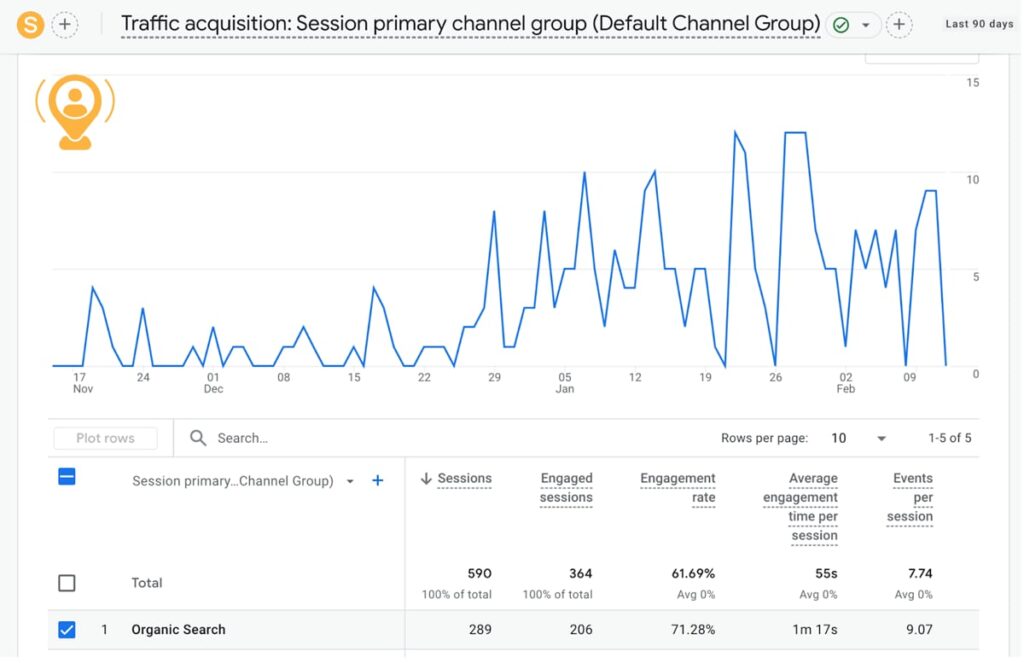
Set realistic expectations. Meaningful results take three to six months. Significant impact takes six to twelve months as authority builds. Progress is gradual: month one shows technical fixes, month three shows keyword gains, and month six shows steady leads.
Track your top three to five local competitors weekly. See what moves work in your market so you can adapt.
SEO Metrics That Matter
Don’t obsess over rankings alone. The metric that matters most is conversion rate—what percentage of organic traffic becomes a lead.
Track cost per lead (CPL) from SEO. Compare it to paid ads, HomeAdvisor, and referrals. Over time, SEO should become your cheapest lead source.
Connect SEO efforts to closed jobs. Ask every new customer how they found you. When you can tie a keyword ranking to a signed contract, you’ve proven true ROI.
Ready to Get Found?
Right now, customers in your area are searching for roofers—and finding your competitors. Here’s how to change that:
Step 1: Schedule a Free Strategy Session
We meet to discuss your business, budget, and needs honestly—no sales pitch—just a real conversation.
Step 2: Review Your Custom Playbook
We create options tailored to your situation, so you know exactly what it takes to rank.
Step 3: We Execute the Playbook
You focus on running your roofing business while we make you visible everywhere customers search.
Or call us directly at (386) 227-6610.
Reviews